Camera Movement with Meaning
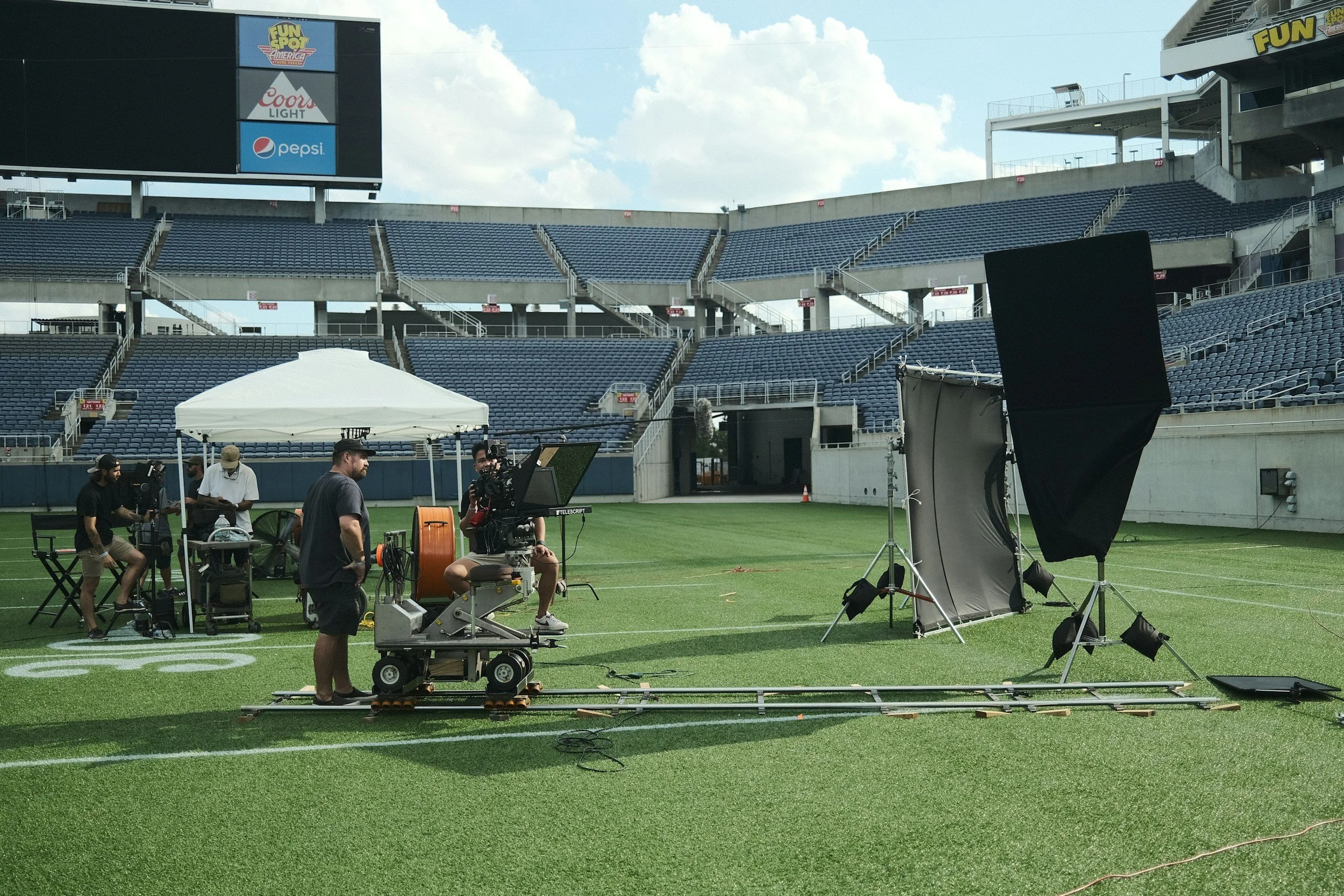
Image by @patrickkonior courtesy of Unsplash
There is a specific kind of magic that happens when a camera moves through space. It is a feeling of weight, intention, and a deliberate point of view. Yes, traditionally when using the production term “dolly,” you’re talking about a specific type of production equipment. But I’d like to use the term more loosely, since “dolly” shots can be accomplished with track, wheels, gimbals, steady cams, sliders… even DIY rigs like PVC pipe and a piece of plywood on skateboard wheels. The “dolly” is a philosophy of movement, not just a piece of hardware. The goal is always moving the entire camera through space to change the viewer’s perspective.
But movement without meaning is just noise. For your dolly shot to fit your narrative, you have to master the “why” behind the move.
The Anatomy of the Move: Narrative Bookmarks
Before you pick up your rig, you have to define your start and end frames. A professional dolly move comes from intentionality; the camera arriving exactly where it needs to be at the precise moment the emotional beat lands.
Every move should have a definitive start composition and end composition.
Think of these as your narrative bookmarks:
The Start: This frame sets the context. What is the current reality of the scene?
The End: This frame provides the revelation. By the time the movement stops, what do you want the audience to feel or realize?
Anyone can simply move the camera around. It doesn’t matter if you’re on a $10,000 track or a handheld gimbal; without these two compositional anchors, the movement feels aimless. For an example of the difference between intentional movement and aimless movement, watch the following video essay. I’d like to draw your attention to the 4:47 mark when Tony, the essayist, examines a scene from The Avengers.
The Toolkit: 3 Essential Dolly Moves
To execute these effectively, you need to understand what each type of movement communicates to the person watching.
1. The Dolly-In (The Push-In)
This is the most intimate move in your kit. As the camera physically moves closer to the subject, the space around them seems to compress, heightening the emotional stakes.
The Intent: Use this to signal a character’s realization, a moment of rising tension, or an increasing sense of importance in the dialogue. It says to the audience: “Pay attention; this matters.”
2. The Dolly-Out (The Pull-Back)
The reverse of the push-in, this move slowly reveals the world around the subject.
The Intent: This is a powerful tool for emphasizing a character’s isolation or loneliness. By widening the perspective, you show just how small or vulnerable the subject is within their environment.
3. The Lateral Move: Tracking and Parallax
A lateral move involves traveling the camera side-to-side, but how you handle the lens during that travel changes the feel of the shot. Both the Tracking Shot and the Parallax (Counter-Pan) Shot are essential tools; the right choice depends entirely on the story you are trying to tell.
The Tracking Shot: The Objective Observer
A standard tracking shot occurs when the camera moves parallel to the action while the lens stays fixed at a 90-degree angle to the path of travel.
When to use it: Use this when you want to capture the scale of an environment or follow a character’s progress through a space without interfering with their journey.
What it says to the audience: It feels objective and steady. It’s perfect for world-building or “walk-and-talk” sequences where the focus is on the movement and the dialogue rather than a specific emotional revelation.
The Parallax Shot: The Subjective Connection
To achieve the Parallax Effect, you add a “counter-pan” to your lateral move. As the rig moves left, you slowly pan the lens right, keeping your subject locked in the center of the frame.
When to use it: Use this when you want to isolate a character from their surroundings. Because the background “wraps” around the subject while they stay stationary in the frame, it creates a powerful sense of three-dimensional depth.
What it says to the audience: It feels subjective and intense. It tells the viewer, “This person is the only thing that matters right now.” It’s an ideal choice for a moment of internal conflict or when a character is experiencing a moment of profound realization amidst a busy environment.
By understanding the difference between these two, you can choose the move that supports the narrative beat. One observes the world; the other anchors us to the soul of the character.
Final Thoughts
The next time you’re blocking a scene, don’t just ask where the camera should sit. Ask where it should go. Use your movement to build tension, create depth, and guide your audience.